Plumbers and HVAC: book the job while you are under the sink
You are under a sink, or in a crawl space with a meter in your hand, and the shop phone rings. The caller does not know you are there. The tap is dripping, or the house is cold, and another company is one tap away. Decide what the phone does while you are on that job.
The phone is the front counter
One caller is angry and cold. The next wants a price on a water heater. A third asks only whether you cover their zip code. Each call needs a different next step. A single voicemail leaves the choice to the caller.
Vidhani AI puts a front desk on the shop line. It answers while the techs are out, asks the dispatcher questions, and settles the call. Routine work goes on the schedule. A flooded basement, or a dead furnace in a freeze, goes to the on-call person with the details written down. Heating and cooling alone is on the HVAC page. Heating and plumbing together are on the home services page.
Four kinds of calls
Sort the line into four kinds, then rewrite the rules in your own words.
An emergency is a safety problem, or a house that cannot wait: a furnace dead in a freeze, cooling out in a heat wave, a burst pipe, a sewer backup, or a gas smell. For a gas smell, the caller leaves the home and calls the gas utility, and your on-call person is alerted. That call is not booked as an ordinary visit.
A repair can wait for a window: a leaking faucet, warm air from a cooling unit, a water heater that stopped. Take the symptoms in the caller's words, check the service area, and offer the next open window.
Maintenance is the gap-filler: spring cooling checks, fall tune-ups, drain cleaning, plan visits. It needs a time, not a diagnosis.
A replacement quote is an old system and a request for a number. Do not price equipment nobody has seen. Collect the system type and a time the caller is home, and book the estimator. A fixed service-call fee you already publish can be stated. A price that depends on the job is a visit.

The next visit can be on the calendar while you are still at the first job.
Where you draw the line
You draw it. A slow drain is routine for most shops. No heat, with a freeze on the way, is not. Mild weather and healthy adults can wait for cooling. An infant or an older adult in that same house makes it urgent. A leak the caller cannot stop goes to the on-call plumber. A drip does not.
Write the examples. "Anything important" fails, because each caller believes their call is the important one. A call that matches no example goes to a person with the details attached. The desk does not invent a bucket.
The urgent message carries the name, address, phone number, system or fixture, symptoms, and the safety answers you chose.
In a heat wave, or on the first hard freeze, you can send fewer calls to the on-call tech, push routine work to the next week, or stop same-day windows. You tell us, and calls follow the new rule from then on. More than one caller can be on the line at once.
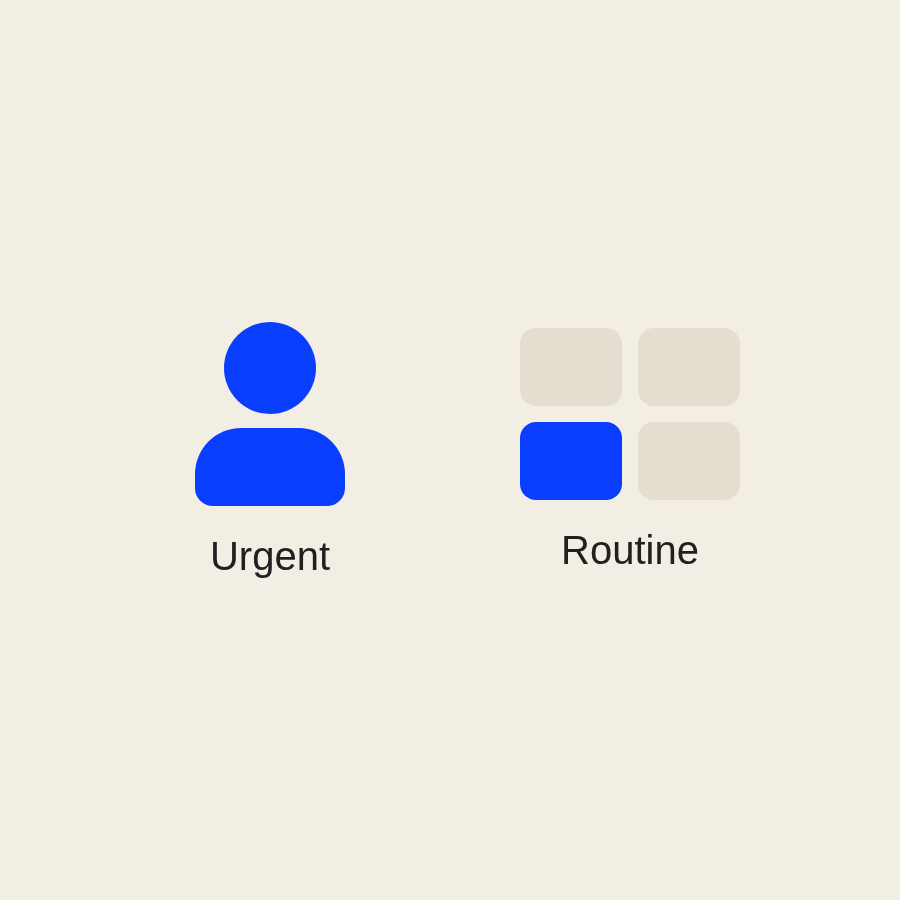
Urgent goes to a person. Routine goes to an open window.
A window that exists
The desk offers windows on your schedule, and no tighter promise. It reads openings in the dispatch tools you use, and it writes the booking on the call when those tools allow it. If the board is full, the caller hears the next window that is real. With your permission, that request goes to the on-call person instead. Customers can move a visit into an open window and ask where the tech is. The answer is the latest note on your schedule.
They keep the number on the truck. There is no app to install and no new number to learn. Setup, on the how it works page, is a 30-minute call, a desk built from what you said, a call where you try to break it, and only then a shop line pointed at it.
When the call never connects
Some people hang up before the forward finishes, or they dial a line that is not forwarded. A one-message text waits for you. If you are under the sink, it waits with you.
Our text goes out seconds after the missed call. The desk continues: what is wrong, which window is open, then a booking or a plain next step. Both land on the morning list. The missed call text back page uses a dripping tap that is booked before the plumber climbs out. Your windows set the time. The list the next morning has the bookings, the emergency that rang through, and any question the desk could not answer.
What it will not do
It does not diagnose, and it does not coach a caller through gas, electrical, or pressurized lines beyond safety steps you approved. A licensed technician does the repair. It states fees you supplied and does not invent a price. It does not promise an arrival you did not set. Urgency rules and the service area sit outside the model, which the AI receptionist page describes.
Bring this to the first call
- The trades you do, and the ones you do not.
- Towns or zip codes you cover, and the ones you refuse.
- Urgency examples, not a slogan.
- Who is on call, who is backup, and what the caller hears if neither answers.
- Fixed fees and plan terms to state, and work you price only on site.
- Windows, and how many jobs fit in each.
Heating, cooling, and plumbing can share one number, with different routing. Separate crews need more of it than a one-van shop.
The published price
The pricing page states it. Both plans cost $299/month, including 600 call minutes, then $0.50 per extra minute. Essentials setup is $995; Premium setup is $1,995. Booking into practice software is Premium only.
For this trade the quote still comes from the 30-minute call. It moves with call volume across the year, how sharp the spikes are, whether you want text and chat as well as calls, and how many locations or trade lines share a number. Bring the busiest week you had, the on-call headcount, and the jobs you refuse.
Compare that quote with one missed repair, using your figure. If the four kinds of call match the shop, bring the six lines to a demo.